29 October 2009

What About the Body?

against time!  always there!
belly breast brain
breath blood bone
together   beautiful
beneath
skin ablaze with
travel  trips  time
together  time  broken  brilliant!
big  bare  blind  blushed
behaved  bellowed  beat  birthed
born   always there!   beautiful!
asked and answered   ask beauty!
breast  bone  bosom  back
ached  armed  asked
always there!  ask time
burn  boil  bleed  build
beauty yes!  always there!
ask  tell  there! there!
ask  ask  ask

PROMPT: Magnetic word tiles selected on the basis of what appealed to me that day. (I have LOTS!) I chose lots of "B" words to go with "body."

28 October 2009

The Knife

A friend died today
not in bone but in heart.
I watched steel enter her eyes
days ago, and my idea of her--
which is more about me--
stilled.

Who are we to one another?
Is that some truth we can never know?
I feel sick and out of step and
empty
but strangely
free.

PROMPT: Magnetic word tiles selected on the basis of what appealed to me that day. (I have LOTS!)

27 October 2009

Along the Listening Path

A few days ago, my husband came home from getting his hair cut with a great 'do but otherwise looking a wee bit haggard. "What's wrong?" I asked.

"The woman who cut my hair never took a breath from the moment I sat down in the chair," he replied. "She was a living, breathing run-on sentence, and I'm exhausted."

Is it just my imagination, or are there more compulsive talkers than ever? We encounter them in practically every walk of life--at the grocery, the hairdresser, in waiting rooms (where one woman talked to me once even though I closed my eyes and fell asleep; I woke when they called my name and she was still talking!).

Not much cause-wise comes up in a Google search on the problem, though you'll find any number of names for it and the thinnest of coping advice. This takes the form of "stay on your toes," which is, of course, for the person being talked at and also works if you want to avoid walking off a cliff or being mauled by bears in the wild.

Imagine, then, how delighted I was to find an essay on listening I'd never heard of before by a writer I had. This Sunday I'll post a review about Brenda Ueland's If You Want to Write. In searching the internet for a photo of her to accompany the article, I came across her essay "The Art of Listening." Ueland died in 1985, so the essay was around long before compulsive talking hit my radar screen.

While Ueland tries to entice people into wanting to be better listeners--"because listening is a magnetic and strange thing, a creative force....When we are listened to, it creates us, makes us unfold and expand. Ideas actually begin to grow within us and come to life."--she also presents both sides of the problem. "Now, there are brilliant people who cannot listen much. They have no ingoing wires on their apparatus. They are entertaining, but exhausting, too."

She then relates how her father was one of those men, and because he always talked and never listened, she stopped trying to be heard, and so they never connected in his lifetime.

There's a lot of buzz these days about how we get tossed back to us in human relationships what we dish out. That's not completely untrue, but it seems to get pumped up to the point that it morphs into what it criticizes and manages to let everyone off the hook instead of making each of us more accountable.

After all, this way of thinking goes, the offended person must have induced the other's behavior some how. Projection is the word attached to this. And while I don't deny the psychological definition and reality of projection, this other circumstance I'm describing is a bastardization of it.

While I will confess there are times I've contributed to someone else's bad behavior, too many to count in fact, there are also plenty of instances when someone was just plain rude and unconscious, and I had nothing to do with it except as witness. But what I think the people who preach about this sort of thing are trying to say is that sometimes there are things we can do to try to redirect the other person's energy. Staying on our toes, it turns out, is just the beginning:
Recently, a man I had not seen for 20 years wrote me. He was an unusually forceful man and had made a great deal of money. But he had lost his ability to listen. He talked rapidly and told wonderful stories and it was just fascinating to hear them. But when I spoke--restlessness: "Just hand me that, will you?...Where is my pipe?" It was just a habit. He read countless books and was eager to take in ideas, but he just could not listen to people. Well, this is what I did. I was more patient--I did not resist his non-listening talk as I did my father's. I listened and listened to him, not once pressing against him, even in thought, with my own self-assertion. I said to myself: 'He has been under a driving pressure for years....But now, by listening, I will pull it all out of him. He must talk freely and on and on. When he has been really listened to enough, he will grow tranquil. He will begin to want to hear me.
 And he did, Ueland says, after a few days, at which point he began to ask her questions and she neatly worked his listening problem into her answers. Two days of solid listening is no small feat, but Ueland saw the value in sticking with it. By listening, she says, she starts up another's "creative fountain" and that does them good.
Now why does it do them good? I have a kind of mystical notion about this. I think it is only by expressing all that is inside that purer and purer streams come. It is so in writing. You are taught in school to put down on paper only the bright things. Wrong. Pour out the dull things on paper too--you can tear them up afterward--for only then do the bright ones come. If you hold back the dull things, you are certain to hold back what is clear and beautiful and true and lively.
I'm a writer and a writing teacher, so I like how she pulled in the writing analogy. I also encounter compulsive talkers in my writing workshops. It's a natural draw. They come to writing because they want to be heard, finally. The paper or computer screen before them is blank, waiting to be filled, and it doesn't interrupt or talk back or expect them listen to its story. It gives free reign, and these people are more than ready to take hold.

For my own part, I came to writing because it was something I was born to do, which is neither a greater nor a lesser calling; it was just always there. I was the kid who wrote a song when she was 7 and went around the house singing it into a hairbrush. When I was 9 and my fourth-grade teacher cast all the blue-eyed children in the class play, I wrote my own play in retaliation and cast brown-eyed friends. Then in the summer I was 10 I tried to rally the other kids who lived in my neighborhood to put on a play I was writing based on Cinderella.

Little did I know it then, when life gushed out around me on all sides, that one day I would suffer over rather than embrace the blankness of the page before me, unable to fill it, my stomach cramping at its sight. What I went through looked a little different than compulsive talking, but it too came from not being heard.

More precisely, it came from being silenced.

So I understand firsthand what it feels like to not be able to get out what you need to get out. But in a workshop setting, I have a roomful of people who all deserve a share of the airspace, and it's my responsibility to keep everyone engaged.

A person who's been silenced will heal herself as long as she feels safe and there's a space in which she can speak. Talkers, on the other hand, I approach by encouraging them to funnel all that energy onto the paper. Writing is a container. If the glass breaks it soaks the table and your clothes and the floor, and then someone slips and falls--well, you get it. There is energy in story, but too much talk about the story blows it apart.

How to be a good listener and a more focused writer follow along the same path. The stepping-off point for both is listening to yourself--The Little Surround of today's poem (see post below). Find a quiet place at the center where you hear what that person inside wants said....

..and then, of course, write it on that empty page.

It will do you good.

The Little Surround

Listen long and love
the little surround:
leaves laugh--like us!

Storms step through the sky
as if in slippers and
winter steams its cold whisper.

The soul sleeps beneath it all
and wishes
in drizzled dreams.


PROMPT: Magnetic word tiles selected on the basis of what appealed to me that day. (I have LOTS!)

26 October 2009

Write a Novel in a Month?
Meet Someone Who Did!

Julianna Thibodeaux won’t be one of the 100,000 or so people powering up their computers come 12:01 a.m. this Sunday when National Novel Writing Month gets under way. But she’s done it twice before, in 2008 and 2007, and recommends the process. 

“There’s nothing like a deadline to keep you working,” she says. “When I first sat down I wasn’t really sure what the novel was going to be about. But the time pressure actually freed me to let my unconscious dictate that.”

National Novel Writing Month—NaNoWriMo for short—commences Nov. 1 and has grown from fewer than two dozen participants in 1999 to more than 119, 000 in 2008. Of course, not everyone who starts out to write a minimum 50,000 words and submit them to the organization’s online counter finishes and gets the completion certificate. A mere six made it the first year, but the numbers neared 22,000 in 2008.

Thibodeaux, who’s a freelance journalist, art critic and aspiring poet and novelist, has taken up residence in both camps. In 2007 she finished her NaNoWriMo novel—working title “The Mother’s Room”—and got the certificate. But the following year she had too much else happening and didn’t make it. She’s still working on both books, though, and continued to polish her ’07 effort as part of graduate studies in interdisciplinary art at Goddard CollegePlainfieldVt.

She says she began the process by figuring out how many words she had to average a day to finish in 30 days. That number is either 1,666 and you come out 20 words short or 1,667 and you come out 10 words over. “Eventually I lagged behind and had to write 2,000 and 3,000 words a day to finish.”

But finish she did, and the product she ended up with wasn’t something she would ever have suspected she’d write. “I was far more playful than I would have been if I’d just sat down to write a novel with clear intentions as far as a plot, which is kind of ironic because of the pressure,” she confesses. “But I didn’t have time to over-think it. Once that plot line emerged it gave me lots of places to go, and who I am as a person and writer funneled into that.”

The way in, though, was unexpected. “A feminist murder mystery? No, I never thought I’d write anything like that,” she laughs. “Murder mysteries aren’t something I typically read either.” And the book she started in 2008 is different still—a young boy whose own gender identity is just emerging as his father’s takes a sudden turn.

Several of Thibodeaux’s graduate advisers and a writer-friend have since given her suggestions about the first novel. “And I’m finding that the revision process is much harder than writing—obviously, since two years later I’m still polishing.” Her next step is to use this polished manuscript to find an agent and then, with an agent’s help, a publisher.

Nearly 40 past participants already have published their NaNoWriMo works, according to the website, which puts the odds somewhere around 1 in 2000. And as much as the event has grown in popularity over the years, it has its detractors as well. Back-to-back with a feature promoting the contest last year, National Public Radio carried an interview with an established writer who suggested the world didn’t need anymore bad novels, that most of what gets written in NaNoWriMo should never be written at all and will never—thankfully, he added—see the light of day.

But Thibodeaux disagrees. “Plenty of bad novels get written without NaNoWriMo, that’s for sure. But I don’t think there’s ever anything inherently bad that comes from the creative process at work in a person. People have all kinds of different intentions when they write. Some people are just interested in expressing themselves, while others may only want to be the next best-selling sensation and will do whatever it takes to get there. And, of course, there are many variations. To say some way of writing is destructive and bad is irresponsible.”

Instructions for joining in the ’09 contest can be found at www.nanowrimo.org. Basically it’s 50,000 words uploaded by midnight Monday, Nov. 30, after which, as Thibodeaux attests, the real work has just begun. But how long is 50,000 words? The website says it's equivalent to a short novel, and you can, of course, write more. Maybe trying to put your head around the daily average makes more sense—1,667 words. Well, if this article counted toward my NaNoWriMo quota for the day, I’d be about 47 percent of the way there.

Can you finish? You’ll never know unless you start. Good luck!

25 October 2009

The Book of Questions

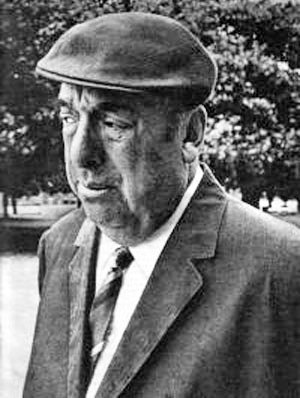
by Pablo Neruda 
(William O'Daly, translator)
This is a small book--5 1/2 x 7 1/2 x 3/8 inches and only 70-some pages. You'll likely read it in one sitting, since half its bulk comes from the poems printed as Neruda, a Chilean, wrote them, in Spanish, and half is the English translation. They are simple poems, all questions as the title denotes, yet you'll find yourself reading them again and again--perhaps dreaming up answers. They are fun to read in Spanish, too, even if--like me--you only have a few years of high school instruction to lead you on.

Why is this a book I recommend for writers? Because it has the wonderful effect of making you look at the world in a different way--through Pablo's glasses--and ask the questions of a child. From there, you may go on to write poems with the clear, bright insight of a child. And after that, who knows?

I have selected favorites--so hard to choose!!--from this book on several occasions and used in my workshops for the opening reading, from which we draw our first writing prompt. Always everyone is charmed not only by Neruda's questions, but by the ones they write in response and those of their fellow writers. They leave thinking about the world, and responding to it, in a different way--as if it had life, and cheek, and a sense of humor. They discover a sense of humor in themselves they had forgotten, or lost.

Most of the poems are whimsical and upbeat. For instance, the book opens with:

     Why don't the immense airplanes
     fly around with their children?

     Which yellow bird
     fills its nest with lemons?

     Why don't they train helicopters
     to suck honey from the sunlight?

     Where did the full moon leave
     its sack of flour tonight?

But many are also philosophical, and a few are openly political--for instance the series on Adolf Hitler, which begins with these lines (number LXX):

     What forced labor
     does Hitler do in hell?

The first time I used a smattering of these poems as a workshop prompt, the results were so breathtaking I gathered everyone's offerings together into an illustrated e-book I posted on my website. Reading them I felt like this (number XLIV):

     Where is the child I was,
     still inside me or gone?

     Does he know that I never loved him
     and that he never loved me?

     Why did we spend so much time
     growing up only to separate?

     Why did we both not die
     when my childhood died?

     And why does my skeleton pursue me
     if my world has fallen away?

Why, indeed! This is one of those little books you will cherish--as if there was any other way to feel about Pablo. May he rest in the peace his words conjure.


Foodies

Our tapenade is full
of oil & olives & capers
& clouds drunk on magic.
Our chowder runs thick
with cream & clams,
dreams & calm and mystery.
Your meals drizzle & dazzle
and I long to drown in
the gift that is dinner--
fevered tomatoes, 
onions loud with moon,
fennel drenched in lust
and wine that lingers lazy & wild in the mouth--
I am a mesclun muse always chanting "More!"
for I know your cooking never lies.

PROMPT: Magnetic word tiles selected on the basis of what appealed to me that day. (I have LOTS!)