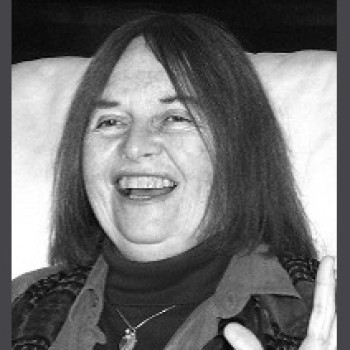
24 November 2009

Me, You, Bullfighters & the Biscuit:
Living 'All the Way Up'

PROMPT: A memorable quote from a book, movie or interview. See where it took me...

This Thanksgiving week marks the end of my dealings with doctors and hospitals for the year (I hope). The end of January, it starts over. This is the pattern of my life for the rest of my life. I can't change it, but I'm going to try in these few months off to learn to think about it differently. Maybe I'll get lucky and my feelings will follow my thoughts, because I want to live "all the way up."

In Ernest Hemingway's novel The Sun Also Rises, one character says to another, "Nobody ever lives their life all the way up except bullfighters." I want to be a bullfighter (minus the animal cruelty).

The gist is that bullfighters face death every day, and that makes them live differently. It's often been cited to explain why Hemingway's characters and Hemingway himself may have been so adventuresome and often reckless. If you can stare death in the face or even laugh at it, then you get a rush of some sort, and sometimes you get hooked on that rush.

I heard this Hemingway quote last night in a segment of American Experience on PBS about the legendary racehorse Seabiscuit and his hard-luck jockey Red Pollard. Both horse and man, linked, overcame incredible odds--and ridicule--to achieve grace and greatness. Pollard's daughter recounted how her father was someone who kept coming back, who lived his life "all the way up," like Hemingway said. I want to be a Seabiscuit or a Red Pollard.

It all reminded me of a passage in Anne Lamott's book on writing, Bird by Bird. When Lamott's friend Pammie was dying, Pammie's doctor told Lamott, "Watch her carefully right now, because she's teaching you how to live." To me, what Lamott goes on to describe is the true meaning of all the way up: "To live as if we are dying gives us a chance to experience some real presence. Time is so full for people who are dying in a conscious way, full in the way that life is for children. They spend big round hours."

I had a bout with thyroid cancer four years ago this month. I was never anywhere close to death. I had two surgeries and my surgeon hid the incision so well in the existing wrinkles at the base of my neck that no one, me included, could find it six months later. Most thyroid cancers grow slow and are easy to treat. They remove the gland, lace some iodine with radioactive material, and the patient drinks up. Thyroid cells suck up iodine like kids do candy on Halloween, so the radioactive part of the cocktail kills any cells the surgery missed--theoretically anyway. You don't lose your hair, the pain is mild and short-lived, you're only toxic to people and small animals for about a week (!), and most people never have a recurrence.

But there are downsides: (1) You become identified to both health-care workers and others as someone who's had cancer and is therefore more likely to have it again, and (2) finding a hormone dosage both you and your doctor can live with will become the scourge of daily life.

Once you've had cancer, doctors go into attack mode. I'm not saying I don't want them to look out for me; I just wish they could understand how the way they do it ripples through the rest of my life. They scrutinize labs and follow up any blip with various imaging procedures. A small shadow of something on one sort of scan calls for other scans and appointments with specialists to interpret results and rule out worst possible scenarios.

Days to weeks go by while you wait to hear those results. Weeks to months pass while you wait for an appointment with a specialist. Going back and forth to the hospital for tests lulls you into living in the zone of "worst possible scenarios" when nothing could be further from the truth.

Through it all, you try not to worry that some microscopic something inside of you might be trying to do you in. You don't feel sick, so maybe you start to mistrust your feelings as well.

Most people don't know what to say to you, so some will say things that, though well-meaning, make you feel worse. Other people find reasons to isolate themselves from you, as if they could catch what you had. Some of those will cling to reasons other than their own fear of death to explain their withdrawal--that is, they blame you, if only in a veiled way.

You worry most about the people closest to you--a spouse or partner--because of what "being strong" for you is doing to them. And you'll be cranky, because somewhere in this mix you'll be angry about pretty much everything--and that's normal.

These are stages experienced by most people with a chronic illness or a serious injury. What’s unique to thyroid cancer and nobody gives much thought to is that the thyroid gland is your body's furnace, except now you don't have one. Sure, there are pills to make up for it, but it's not the same, and no one prepares you for how this will impact your daily life.You spend a considerable amount of time either hypothyroid or hyperthyroid--never feeling exactly normal again.

Hypothyroid is where the doctors want you for treatments and some scans. You'll be very tired and have trouble waking up from sleep. Normal body functions slow way down, you'll be cold a lot, and all this will make you irritable.

Most of the time, though, they'll want you hyperthyroid, which is standard for deterring the growth of cells the nuclear cocktail missed. It's where you'll live most of the rest of your life. It will make you very tired, too, but this time, because you can't get or stay asleep. Body functions speed up, you'll be intermittently hot and cold as your body frantically tries to compensate for the swings, and all of this will make you--guess what?--irritable. Maybe even aggressive. It's a lose-lose.

In the midst of my last round of tests, which started in August, I dreamed I was a hostage in "The Thyroid Zone." Sounds like a plot for a sci-fi thriller, I know. In the dream it showed up as a title on the cover of a book. I wrote about it today to remind myself it’s okay to laugh about it. That's probably why I dreamed it. I needed to vent.

I should be glad I'm alive, you say, and believe me, I am! In the midst of the madness, I experienced fleeting moments of great presence: Moments when I watched simple things--like my husband undress or a squirrel nibble a crust of bread, and my heart pounded with the sheer beauty of it! They were moments I might have missed if not for "The Thyroid Zone."

Now that I've lived there a little, I want more. I want to live all the way up more often than not.

The small shadows that keep appearing and disappearing inside my neck reflect the nature of neck lymph glands, which are chiefly for drainage. Doctors will pore over mine the rest of my life, looking for anomalies. So far, all that’s turned up is my gaping need for perspective. I need to let the uncertainty I can’t escape teach me how to live those big round hours Lamott talks about because, as she so succinctly puts it, "the truth is we are all terminal on this bus."

The truth is, we can all strive to live all the way up without illness or injury or bad luck. As I see it, we are all bullfighters already. We are all Seabiscuit. We are all down-on-our-luck jockeys looking for our next best ride. The truth is, as long as we're here (and then some, I think), we always have at least one more chance and we may as well keep trying to get it right.


22 November 2009

Wedding Day

Skies socked in clouds so bloated and gray they
looked like a week-old corpse.

Forty-mile-per-hour winds that made for
horizontal rain. It stung like a jealous friend.

And when the temperature kept falling,
snow peppered through

spooky flashes of sun.
All this in May, the month of flowers.

I wondered what it all meant for our life together.
An aunt told me luck

for we'd had a little bit of everything all day,
like my uncle and her.

I remember dogwoods through the window
clutching so tightly to their branches no petals were lost.

I remember cold outside but warm in:
Twenty years later: it's the same.

My aunt was right.

PROMPT: What's the most amazing weather you've ever experienced?

Witness to the Fire:
Creativity and the Veil of Addiction

by Linda Schierse Leonard
This was an intriguing read for me because it bridges psychology and creativity. The author, Linda Schierse Leonard, is a Jungian analyst, which means in part that she works with clients through dream material.

As someone who counsels others, you'd expect her to have a wealth of material from which to draw. But instead, she offers up herself as a flawed human being, who after being raised in an atmosphere of alcoholism and co-dependency eventually became an alcoholic, and then a recovering alcoholic. That sort of honesty and genuine connection must go a long way in a therapeutic relationship.

I've read a number of Leonard's books, and I like her "literary" approach to the discussion of psychological problems--probably because I'm a writer as well and a reader, and if you tell a good story, you'll get me hooked. But what drew me to this book after Wounded Woman and Meeting the Madwoman was its particular focus on the lives of several writers wrestling with various addictions, the works they wrote, and how the lives and works were linked.

There's a whole school of folks out there who think writers' lives are irrelevant to an evaluation of their works. And I agree, certainly, that the work must stand on its own. But, as a writer, I also know my life experiences, and how I feel about things feeds everything I write. So it intrigues me to "listen in on" what that might have been like for someone else.

In this case, we get a peek into the lives of Fyodor Dostoevsky, who had problems with gambling, money in general and love; Jean Rhys, who early on was addicted to love and later to alcohol; Eugene O'Neill and Jack London, both alcoholics, and more. If you haven't read these writers Leonard discusses, not to worry. She tells you everything you need to know to understand her assertions. But you'll find her discussions of their works so compelling you'll soon be searching out titles on Amazon or your library's online card catalog.

In my own life, psychology helped me discover a deeper understanding of how creativity works. For instance, that it ebbs and flows, like the tides, and feeling like I have nothing to write about (i.e., "writer's block") is often because I need to recharge or go within. But I also have a problem with my creative practice. The writer Deena Metzger said in a workshop I attended that what's most important for any writer to develop are "calluses on your ass." She said you need to go to your desk every day and be present to the possibilities of writing. Why has this been such a hard thing for me to do when logically I get it?

Leonard not only speaks to this question by noting similarities between writers and addicts, but she examines productive writers who also struggled with addictions and, thus, links the two again. It's like the age-old stereotype that all artists are crazy or weird. While many may be, many also are not. She differentiates but explains why, perhaps, such a stereotype ever developed:
The relationship between addiction and creativity, as I see it, is not causal. Rather, there is a parallel process occurring in the psyche of the addict and the creative person. Both descend into chaos, into the unknown underworld of the unconscious. Both are fascinated by what they find there. Both encounter death, pain, suffering. But the addict is pulled down, often without choice, and is held hostage by addiction; the creative person chooses to go down into that unknown realm, even though the choice may feel destined. Artists who are addicted have a "double descent"--the one of their addiction and the other of their creativity; their situation is compounded and complex, and they respond in different ways. Some creative artists descend with the help of drugs or alcohol and continue to create. And others continue their addictions to the early loss of their creativity and/or their lives. But once in the realm of the underworld mysteries, they must eventually choose to find form and meaning from the chaos and to return to life and society....Many addicts fear they will lose their creativity if they give up the drinks or drugs, romance or power, that they feel takes them to the creative source. Of these, many who hold onto their addictions die an early death or find their creative spring has gone dry or soured. In contrast, many recovering addicts, after enough healing time has passed, find new energy and open spaces in themselves for a creative life. Both need to know there is a way down and back from the creative depths without recourse to addiction.
I also like Leonard's technique of creating archetypal characters to illustrate the psychological concepts at work in the lives of the creative people she discusses. I recognized some of them in myself and some in people I've known, just as you will. There's the gambler, the outlaw, the trickster, the madwoman, and the judge, to name just a few. Maybe, like me, you'll see that something of these characters in you gets hooked on something of these characters in someone else, and this is really what pulls you away from your writing.

"Every addict who recovers," Leonard writes, "chooses life and makes this existential choice daily." This hooks up nicely with the Metzger adage. It's that daily choice that's at the heart of getting somewhere with your writing. The results may or may not look like success as the world defines it, but the important thing is what you know.


18 November 2009

Cracking Open the Egg of Childhood

PROMPT: This essay grew from a session with my Glendale writers when that group was meeting, and it actually discusses the group's experience with the prompt, which was, What one object lost in childhood would you most like to find?

The girl spied it, not her two big brothers, or her dad, or their assistant pastor who led them on this hike along the shallow river he said drained from a glacial lake high in the Adirondacks. But it was the pastor who knew what it was she found--or sort of. He called it "dinosaur droppings."

"I didn't know dinosaurs carried things," the girl replied, curiously intent. "I wonder why he dropped it." She was 7 or 8 or 9.

"They don't, silly," one of her brothers may have said. He might have called her "stupid" if they hadn't been visiting at the pastor's campsite. "He means it's dinosaur poop," the older boy then whispered in her ear. She withdrew her hands from it, as a reflex, then extended them again slowly, as if she were touching the most delicate crystal.

Something this unusual and this lovely may have been poop once, but it sure wasn't anymore. Time had made it something else.

The rock was quite ordinary on the outside--gray and shaped like a side-wompered egg, but scaled as if it might, indeed, have come from a dinosaur. Only one broken open half remained relatively intact. Inside it, quartz crystals radiated out in white and gold, outlined in a rusty orange. Her dad carried it back to camp for her so she wouldn't lose her footing as she maneuvered along the uneven embankment.

When they got home, she found a place for the rock on a shelf in their garage because her mother didn't like outside things inside the house. Her teacher didn't mind, though, so the girl took it with her to school one Friday for show-and-tell, and the teacher said the correct name for it was a geode.

A year or two later they moved, and the girl lugged the rock along to a new shelf in a new garage. They moved a lot more after that--five houses and schools in as many years. But always the rock went along and assumed its place in the garage.

Its last stop came the summer the girl turned 13, and she found a spot for it on some built-ins next to where her dad kept the hose nozzles and partly used cans of paint. This was the house where they finally stayed, and sometimes she would go out to the garage and hold the rock, particularly when she was missing her friends in all the other places, and shift its heft from hand to hand.

As she grew older, she returned to it less and less. When she cleaned her things out of her parents' garage for the last time to move into her own place, she noticed it, still on that same shelf. She picked it up one last time, and it fell into smaller pieces in her hands, too many bits to reassemble.

If you haven't already guessed, the girl in this story was me. I started writing this yesterday in a workshop I led. I always write along with workshop participants so they know I'm taking the same risks they are, and the prompt I gave them that drew this story out of me was, "Which long lost childhood object would you most like to find?"

People shared wondrous stories--a collection of letters written while attending school abroad, a beloved doll which the writer retained only a photo of, a child-sized chair, a set of Nancy Drew books, a ring that was too big and fell off in a yard, a house now torn down to its foundation and front steps, a friend who opted out of someone's life with no explanation.

More than one person in the group expressed fascination with all the wondrous memories of childhood this prompt evoked. I have been in other writing groups where the same thing happened, and, invariably, someone new to writing--maybe someone who only came because a writer-friend coaxed her to tag along--will express the wonder. "I don't get it," one such acquaintance said once, "I haven't thought about these things in years. Where did they come from? Why are they charged with such magic?"

Childhood, I told my group yesterday, was who you really were before life beat you up. You were pure and beautiful and full of wonder at everything. The process of growing up and living as an adult takes a lot out of us all. If we were lucky as children, we got to feel at the center of the universe long enough to give us the self-confidence we needed to propel ourselves into adulthood. But for many, by the time mid-life arrives, we need to go back to childhood and recharge.

More than one person in yesterday's group also expressed frustration about how their item disappeared:

  • The woman who misplaced the doll when cleaning out her attic wished she'd revisited the dumpster yet a seventh time. 
  • The woman who lost the ring in the yard when she was five said she still drives by the place where it happened and wonders if it's there among the blades of grass. 
  • The woman who grew up in the house now gone visits the remains, and the voices from her childhood replay themselves in her head. 
  • The woman who lost the friend continues to wonder why, certain it could have been avoided, but wishes the person well and keeps her distance.

The writer Virginia Woolf referred to experiences like this--ones that intertwined objects with emotions--as "moments of being" and wondered if...
things we have felt with great intensity have an existence independent of our minds; are in fact still in existence? And if so, will it not be possible, in time, that some device will be invented by which we can tap them? I see it--the past--as an avenue lying behind; a long ribbon of scenes, emotions. There at the end of the avenue still, are the garden and the nursery. Instead of remembering here a scene and there a sound, I shall fit a plug into the wall; and listen in to the past. I shall turn up August 1890. I feel that strong emotion must leave its trace; and it is only a question of discovering how we can get ourselves again attached to it, so that we shall be able to live our lives through from the start.
We need to harvest the energy of that unspoiled child we were to take us on into the second half of life, and writing can help us. Until someone invents something better, writing must be the plug Woolf meant.

For me, writing about my geode helped me realize it was a sort of talisman during all those years of moving around and making and losing friends in quick succession. It was a promise that something that once was waste could turn into something treasured, in time--something delicate and beautiful in the heart of something cold and hard.

It lay hatched open for me that day alongside the river before the moving began. It hatched a second time the last time I saw it, and in a way marked the next phase in my life--rediscovering the child I'd lost, letting go of the ideas I had about family for the real family I would start myself.

And it hatched again when I wrote about it yesterday and today, leaving behind these words on a page.

Writing is the plug. Childhood is the socket. Where will the energy you access take you?

17 November 2009

For a Misidentified Woman

Her eyes come through the flecks in the emulsion
like a child's grown wide in twilight
gazing through a haze of fireflies and fog.

Maybe there was something to
the plain dark way of dressing then
and the hair slicked-down and drawn
tightly back.

And the quiet stance against the chair--
one hand folded across the other wrist,
one hand dangling a fan.

A woman who pauses to look,
who doesn't distract,
who though she can't see all
refuses to see what isn't there
and won't avert her gaze.

PROMPT: Photo postcards from a Library of Congress collection. Find various collections online at http://www.loc.gov/pictures/. Sometimes I have people choose 1, 3 or 5; sometimes I have them pass 1 or 2 to the left and 1 or 2 to the right so that they end up what something they didn't expect. They can then choose to write about just one or all.

15 November 2009

Ground Hog's Day

I’d marry you again and again and again and—well
you get the idea.

But I’d do it alone and away and without
all the fuss of a wedding.

Just us two on a trip to somewhere we shared—
like the last 20 years.

I’d marry you again and again and again and—well
you got the idea.

PROMPT: Which moment from your life would you choose to relive if you could?

Letters to a Young Poet
& The Possibility of Being

by Rainer Maria Rilke
Joan M. Burnham, translator
I first read these letters when I was in college and wanting oh-so-desperately to write but thinking I had nothing to say and no one interested in listening. I asked the same question every writer asks, particularly when they're just beginning--Am I any good?

Rilke's correspondent, Franz Xaver Kappus, was a student with artistic inclinations who felt out of place at the same military school that had ill-suited Rilke years earlier. The two were relatively close in age--Kappus 19 and Rilke 27 when the correspondence began in 1902.That may have been the connection that kept the author answering through 1908. I daresay that most aspiring writers today would need a much more intimate connection to get one reply, let alone a full-blown correspondence.

The question Kappus asked Rilke was the same as mine--Am I any good?--and the poet was kind enough to tell him he needed to redirect his outlook from without to within. In fact, he offered him precious little commentary on the quality of his work and told him to ignore traditional criticism and concentrate instead on continuing to live and write. More than a century later, it's still good advice.

Unfortunately, we do not have Kappus' letters or his poems to line up against Rilke's responses, but nonetheless, the half that is left to us is a treasure and an inspiration to anyone who has ever wanted to write. Rilke wisely advises anyone who seeks a career as a writer to first ask themselves "Must I write?" and if the answer is an emphatic yes, only then to build a life accordingly, making everything else a servant to that desire. I think many people embark on that course without counting the costs, and there are many. It has to be something you feel you are called to.

With the question answered and answered in the affirmative, Rilke then recommends aspiring writers draw close to nature and write on themes of everyday life, including one's sorrows, wishes, passing thoughts, belief in anything beautiful, the scenes of dreams, and the subjects of memory. "Pretend you are the very first man and then write what you see and experience, what you love and lose," he says.

Patience is a virtue Rilke bids Kappus--and anyone who wants to write--to develop. Every impression and germ of feeling involves a carrying to term, he explains, a waiting. In the interim, "Try to love the questions themselves," he advises, "like locked rooms and like books written in a foreign language. Do not now look for the answers. They cannot now be given to you because you could not live them. It is a question of experiencing everything. At present you need to live the question. Perhaps you will gradually, without even noticing it, find yourself experiencing the answer, some distant day."

This seemed poetically beautiful to me as a college student, and altogether reasonable in some ethereal way, but it made me impatient, too. Thirty years later--well, it makes a lot of sense. A writer needs to never get ahead of herself but be present in each moment of the life she's living and make that moment real in her writing. I missed a lot of moments worrying about the past and the future, trying to write about things I knew nothing about, unaware I had a front-row seat on the present moment in my very own life.

Rilke also encourages Kappus to pay particular attention to his sadnesses rather than his joys. "The seemingly uneventful moment, when our future really enters in, is very much closer to reality than that other loud and fortuitous point in time, when it happens as if coming from the outside," he writes. "The quieter and more patient, the more open we are when we are sad, the more resolutely does that something new enter into us, the deeper it is absorbed in us, the more certain we are to secure it, and the certain it is to become our personal destiny."

Ultimately, Kappus did not follow the writer's path. But thankfully, within a few years of Rilke's death he collected these magnificent letters together and published them so that other writers could look to them for understanding and solace.

This particular edition of the letters is two books in one. You have the 10 letters in their entirety--through page 95--then a selection of Rilke's poems--an additional 120 pages. Selections include some of his most well-known poems, including Duino Elegies and Sonnets to Orpheus. That seemed like a good deal, in theory, but the translations of the poems from the German seems stiff and lacks the grace of others I've read. That's why I've included a stand-alone version of the letters in the "to buy" links below. Look for translations of the poems by Galway Kinnell or Robert Bly instead.